

September 22, 2026
After months of silence from the Los Angeles County District Attorney, Diego Rios’ family is taking Claremont police officers Benjamin […]
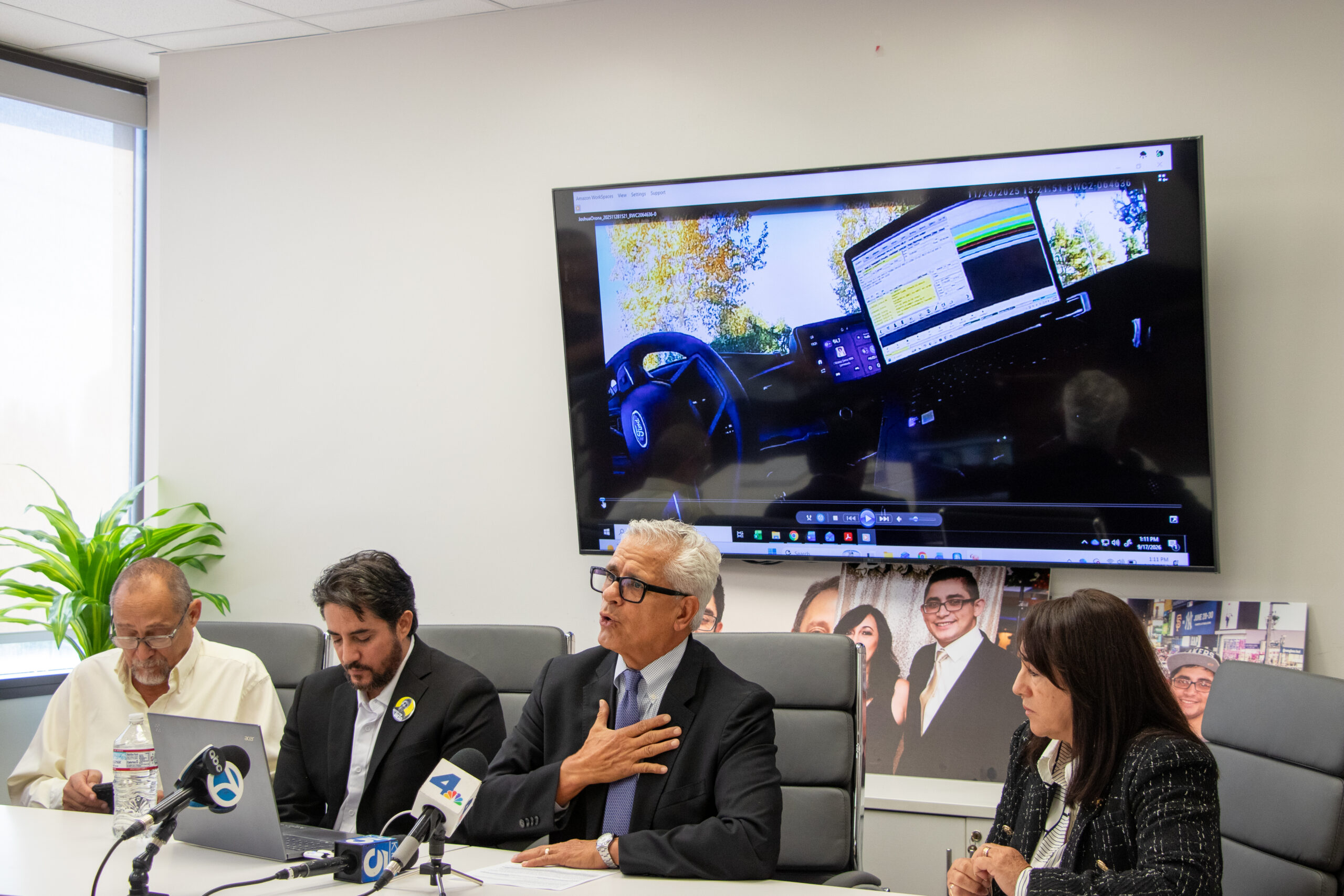
After months of silence from the Los Angeles County District Attorney, Diego Rios’ family is taking Claremont police officers Benjamin Alba and Joshua Orona and the City of Claremont to federal court for killing 30-year-old Rios during a mental health crisis.
On Nov. 28, 2025, Claremont police officers Alba and Orona responded to calls about a man experiencing a mental health crisis less than a mile away from the college campus. When Alba and Orona approached Rios, they escalated the encounter by kneeling on Rios’ upper back, violently restraining Rios until he was killed. On Feb. 12, the Los Angeles County Medical Examiner classified his death as a homicide.
Since then, Rios’ family has written to the Los Angeles County District Attorney and spoken at public meetings to demand that criminal charges are filed against the officers who killed Rios. The District Attorney has given the family no answer and has filed no charges.
In 2020, George Floyd’s murder forced lawmakers across the country to confront how police officers use chokeholds and other restraints to kill Black and Brown people.
“After the killing of George Floyd in 2020, most of the states in the United States put together legislation to prevent anything like that happening again,” the Rios family’s attorney, Arnoldo Casillas, said.
California lawmakers prohibited chokeholds and restricted restraints that prevent people from breathing. The Claremont Police Department incorporated both restrictions into its own policy manual.
“California enacted two laws, one a complete bar on chokeholds, and a restriction on those restraints that inhibited people from breathing,” Casillas said.
Those laws and policies did not protect Rios.
Callers from the scene told Claremont police that Rios appeared to be experiencing a mental health crisis. One caller specifically described him as “acting psychotic.” Claremont PD sent armed officers to confront him.
Victor Rios Jr., Diego’s older brother, said edited news clips have obscured who escalated the encounter.
“They show Diego hallucinating and then suddenly cut to him struggling with the officers on the ground,” Victor Jr. says. “If that’s all you see, you might assume my brother was some violent individual and that the officers were responding appropriately. That’s not what happened.”
Before Alba intervened, Orona began placing a handcuff on Rios without any apparent difficulty. Alba then grabbed Rios’ other arm and violently pulled his wrist and fingers upward in a pain-compliance maneuver for no reason.
“Diego recoiled in pain, screaming, ‘I’m cooperating!’” Victor Jr. said. “And that is around the point where Alba’s body camera conveniently turns off.”
Alba placed Rios in a chokehold, forced him onto the ground and pressed his weight against Rios’ upper back. Orona watched from the side and failed to stop Alba.
Rios told the officers that he could not breathe, but they continued restraining him until he was killed.
Victor Jr. said his brother trusted the officers because they told him they had come to help.
“What breaks my heart is seeing my baby brother reduced to this almost childlike state—completely vulnerable and at their mercy,” Victor Jr. said. “When Orona told him, ‘We’re here to help you,’ Diego trusted him the way a small child trusts a parent who tells them they’re safe. Instead, they betrayed that trust.”
“That afternoon, he died at the hands of two officers who clearly violated Claremont Police Department policy and statewide law,” Casillas said.
Five years after Minneapolis police murdered George Floyd, Claremont police murdered Rios while using the same type of restraint that lawmakers claim they had prohibited. Claremont has protections in place on paper, but its officers ignored them when Rios needed those protections most.
The federal lawsuit seeks to hold Alba, Orona and the City of Claremont responsible for their separate roles in Rios’ murder.
First, Alba used excessive force against Rios. Alba confronted a man experiencing a mental health crisis, placed him in a chokehold and pressed his weight onto Rios’ back as Rios struggled to breathe.
Second, Orona violated Rios’ civil rights when he failed to intervene. Officers have a legal duty to stop another officer from violating someone’s civil rights when they have a reasonable opportunity to act. Orona stood beside Alba and did nothing.
“The law says that if one officer sees another officer violating somebody’s civil rights, they have a reasonable opportunity to intervene and to stop it,” Casillas said. “And here it wouldn’t have taken much: ‘Hey, get off him.’”
Third, the City of Claremont failed to properly train its officers. Claremont prohibited chokeholds and dangerous restraints in its policy manual, but Alba’s actions showed that the city failed to ensure that its officers followed those rules.
The lawsuit’s final claims hold the defendants responsible for violating the constitutional rights of Rios’ parents and causing their son’s wrongful death.
Casillas noted that these failures did not happen separately. Alba used excessive force. Orona allowed him to continue. Claremont failed to train both officers. Together, their actions killed Rios.
The family did not assign a predetermined dollar amount to the lawsuit. They want a federal jury to confront the facts, determine the harm the defendants caused and hold every responsible party accountable.
The Rios family turned to the federal court after the institutions responsible for pursuing justice met their demands with silence.
“We have written letters to the DA for months, and we still have no answer,” Victor Rios Jr., said. “So as Arnoldo stated, if they refuse to prosecute, then we will.”
The District Attorney’s inaction has forced Diego’s family to carry the fight for accountability while simultaneously grieving his murder.
Now, the family is transforming their demands into legal action.
The lawsuit does not mark the end of the family’s fight. It marks a new stage.
“This is only the beginning,” Victor Jr. said. “Our main objective is for accountability, to prosecute these individuals, both at an individual level, and the City of Claremont, who employs these individuals, who is supposed to train these individuals.”
The family refuses to let Claremont reduce Diego to another statistic. Victor Jr. says the officers could have reached his brother if they had treated him like a human being instead of a threat.
“The tragedy is that I know how easy it could have been to reach Diego,” Victor Jr. said. “They didn’t know him. They didn’t know how open he was, how willing he was to connect with people.”
Diego needed care. Alba met him with violence. Orona watched and failed to intervene. The City of Claremont failed to prepare its officers to respond accordingly to Rios’ mental health crisis. The District Attorney has answered his family’s demands with silence.
“If they had shown even a shred of humanity and empathy and tried to understand him, my brother would still be here today,” Victor Jr. said.
Rios’ family now seeks to hold all of them responsible.

Abolition

Labor
anti-imperialism

Undercurrents reports on labor, Palestine liberation, prison abolition and other community organizing at and around the Claremont Colleges.
Issue 1 / Spring 2023
Setting the Standard
How Pomona workers won a historic $25 minimum wage; a new union in Claremont; Tony Hoang on organizing
Read issue 1